RV Storage Parking Near Me: Make the Hours Fit Your Trips
Compare storage access against actual pickup and return routines. Work through gate deadlines, second-vehicle arrangements, delayed returns, and annual travel time.
Practical guidance
Articles designed to help you compare options, ask better questions, and make confident decisions.
The latest
40 articles
Compare storage access against actual pickup and return routines. Work through gate deadlines, second-vehicle arrangements, delayed returns, and annual travel time.
Build an indoor-storage visit plan around the tasks your RV needs, the facility’s written rules, and appointments. Keep inspections, equipment operation, and repairs distinct.
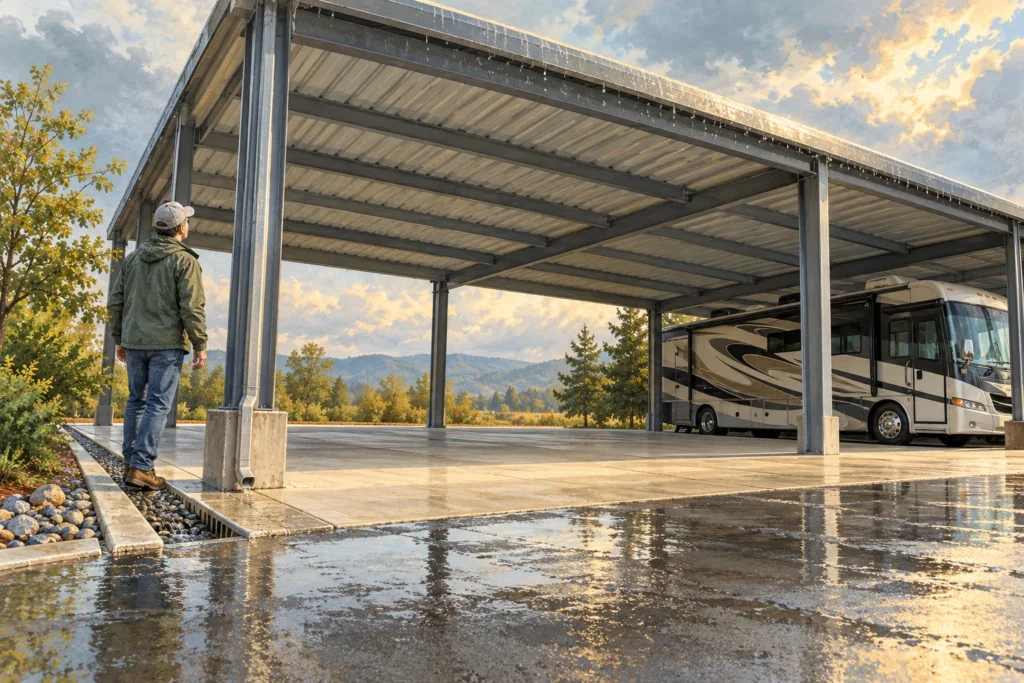
Inspect the actual covered bay for approach clearance, canopy columns, roof runoff, and everyday access. Take a practical survey sheet to your site visit.
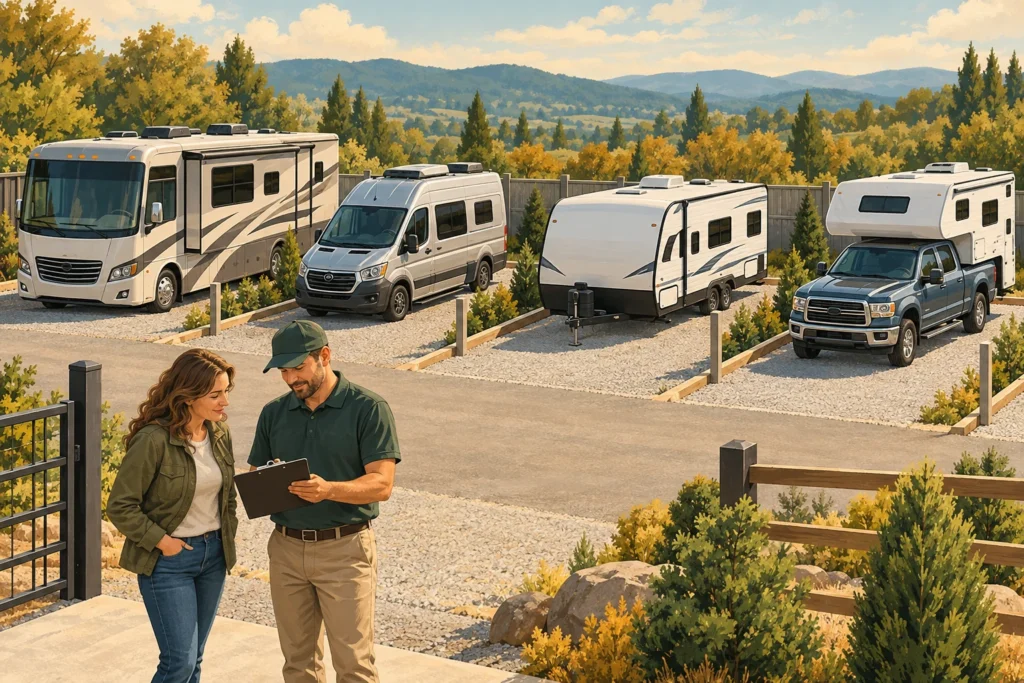
Match your actual vehicle and storage configuration to the operator’s rules. A practical acceptance worksheet prevents mismatched reservations and move-in surprises.
Build a storm plan while conditions are calm. Assign alerts, verify advance relocation options, and make clear when personal safety ends any retrieval attempt.
A canopy can shade different parts of an RV at different times. Compare the actual stall with a simple morning and afternoon observation sheet.
Folding campers need a drying plan; removable truck campers need an approved unloading arrangement. Record both the parked footprint and the working space before booking.
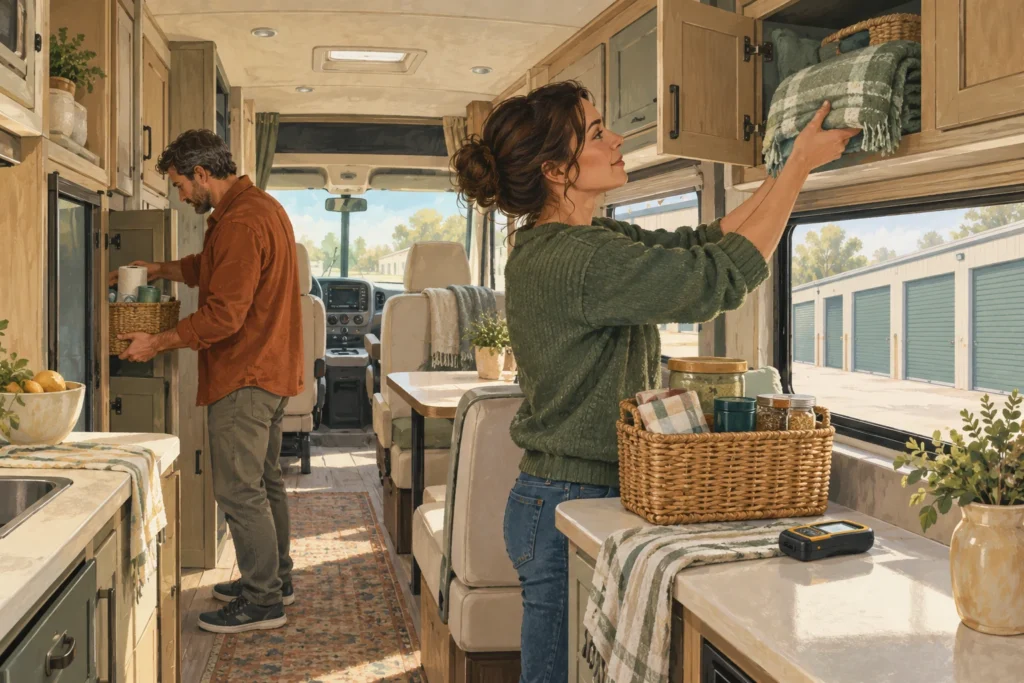
Prepare the inside of your RV before it goes into enclosed storage. Use a room-by-room worksheet to organize contents, moisture checks, and the next inspection.
A waiting list is an opportunity, not a complete seasonal storage plan. Record the offer process, set a decision date, and compare early rent with an…
Find out who answers when an access or maintenance problem affects your trip. Build a contact sheet and check the operator’s follow-up process before renting.